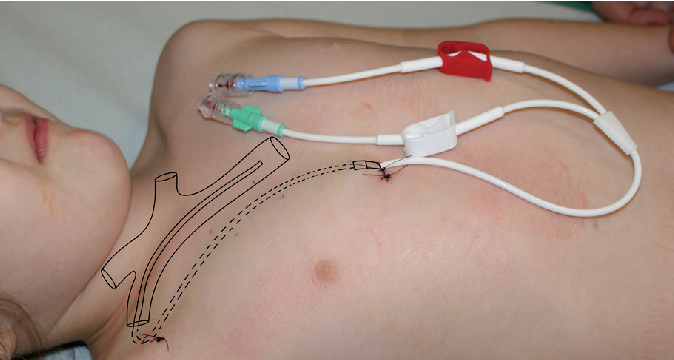
Tunneled Line / Central Venous Access
Reliable Long-Term Vascular Access for Advanced Medical Care. A Tunneled Central Venous Catheter (CVC) is a specialized long-term vascular access device placed into a large vein to facilitate the administration of medications, chemotherapy, dialysis, nutrition, blood products, and other essential treatments. These catheters are designed for patients who require frequent or prolonged intravenous access while minimizing the discomfort of repeated needle insertions.
Our interventional radiology specialists perform image-guided tunneled line placements using advanced techniques to ensure safe, accurate, and comfortable vascular access for a wide range of medical conditions.
What is a Tunneled Central Venous Catheter?
A tunneled central venous catheter is a thin, flexible tube inserted into a large central vein, typically through the neck or chest. The catheter is tunneled beneath the skin before entering the vein, which helps reduce infection risk and improves long-term stability.
The catheter allows direct access to the bloodstream for delivering treatments and monitoring patients over extended periods.
Why is Central Venous Access Needed?
Central venous access may be required for:
- Long-term intravenous medications
- Chemotherapy treatments
- Hemodialysis
- Intravenous nutrition (TPN)
- Frequent blood sampling
- Stem cell transplantation
- Long-term antibiotic therapy
- Blood transfusions
- Critical care management
- Complex medical treatments
A tunneled catheter provides dependable access for ongoing healthcare needs.
Conditions That May Require a Tunneled Line
Cancer Treatment
Chemotherapy Access
Patients undergoing chemotherapy often require reliable venous access for repeated treatment sessions.
Kidney Failure
Dialysis Access
Tunneled dialysis catheters provide vascular access for hemodialysis when immediate dialysis access is needed.
Chronic Infections
Long-Term Antibiotic Therapy
Long-term intravenous antibiotic therapy may require central venous access.
Nutritional Support
Total Parenteral Nutrition (TPN)
Patients unable to receive adequate nutrition through the digestive system may require Total Parenteral Nutrition (TPN).
Hematological Disorders
Frequent Transfusions
Individuals requiring frequent transfusions or specialized treatments benefit from long-term venous access.
Types of Central Venous Access Devices
Tunneled Central Venous Catheter
Long-Term Secure Access
Designed for long-term use with reduced infection risk and secure placement.
Dialysis Catheter
Hemodialysis Access
A specialized tunneled catheter used for hemodialysis treatments.
Hickman Catheter
Chemotherapy and Stem Cell Access
Commonly used for chemotherapy, stem cell transplantation, and long-term medication administration.
Broviac Catheter
Pediatric Long-Term Access
Often used in pediatric and long-term treatment settings.
Implantable Venous Port
Completely Implanted Device
A completely implanted device placed beneath the skin for long-term access.
How is a Tunneled Line Placed?
The procedure usually takes less than one hour and is performed in a specialized interventional radiology suite.
Step 1: Pre-Procedure Assessment
Evaluate Medical Condition
The patient's medical condition and vascular anatomy are evaluated.
Step 2: Local Anesthesia and Sedation
Ensure Patient Comfort
The procedure is typically performed under local anesthesia with optional sedation for comfort.
Step 3: Image-Guided Placement
Insert and Tunnel Catheter
Using ultrasound and fluoroscopic guidance, the catheter is inserted into a central vein and tunneled beneath the skin.
Step 4: Catheter Position Confirmation
Verify Proper Placement
Imaging confirms proper placement of the catheter tip before the procedure is completed.
Benefits of Tunneled Central Venous Access
Recovery After Tunneled Line Placement
Most patients recover quickly and can return home the same day or after a short observation period.
Patients may experience:
- Mild soreness at the insertion site
- Minor bruising
- Temporary discomfort
Detailed instructions are provided regarding catheter care and maintenance.
Catheter Care and Maintenance
Proper care is essential for preventing complications and ensuring long-term function.
Key recommendations include:
- Keeping the dressing clean and dry
- Regular catheter flushing
- Routine dressing changes
- Monitoring for signs of infection
- Following scheduled follow-up appointments
Our healthcare team provides comprehensive training for patients and caregivers.
Potential Risks and Complications
Although tunneled catheter placement is considered safe, potential risks may include:
- Infection
- Bleeding
- Catheter blockage
- Catheter displacement
- Blood clot formation
- Rare vascular complications
Image-guided placement significantly reduces these risks and improves procedural safety.
Why Choose Our Central Venous Access Services?
We provide advanced vascular access solutions using state-of-the-art imaging technology and expert interventional radiology care.
Ready to Consult Dr. Tejendra Ramani?
Book your appointment today and get expert vascular care in Kutch.

Dr. Tejendra Ramani
Consultant Interventional Radiologist
Vascular · Neuro ·
Image-Guided Interventions
MD (Gold Medalist) Neuro & Vascular Interventional Specialist NIMHANS-trained Neuro Intervention, PhD Scholar
View Full Profile