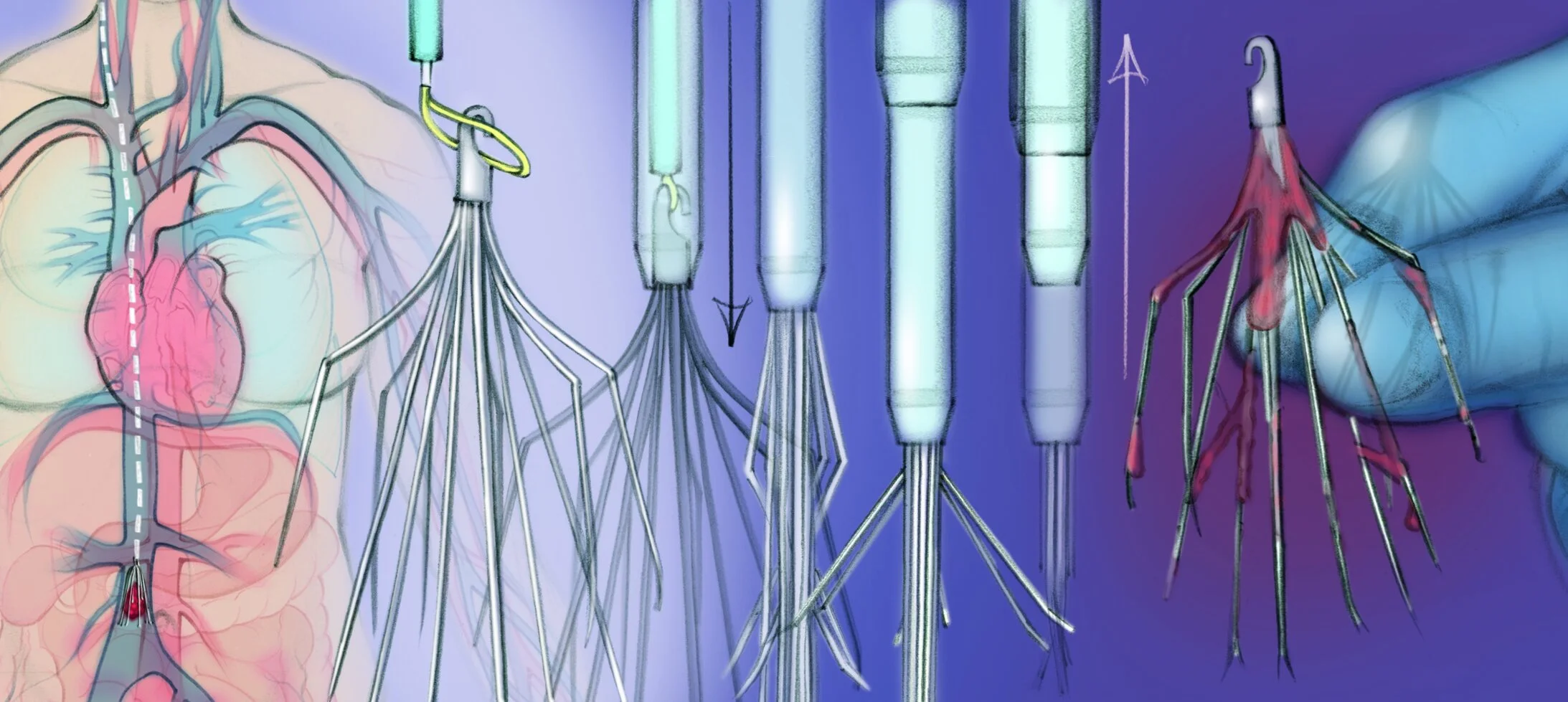
IVC Filter Placement & Retrieval
Advanced Protection Against Pulmonary Embolism. IVC (Inferior Vena Cava) Filter Placement and Retrieval are specialized minimally invasive procedures used to prevent life-threatening pulmonary embolism (PE) in patients at risk of blood clots traveling from the legs to the lungs. An IVC filter acts as a protective device that captures blood clots before they can reach the lungs, providing an additional layer of safety for patients who cannot take blood-thinning medications or require temporary clot protection.
Our vascular and interventional specialists offer expert IVC filter placement and retrieval using advanced imaging guidance and minimally invasive techniques to ensure safe, effective, and personalized patient care.
What is an IVC Filter?
An Inferior Vena Cava (IVC) filter is a small, cage-like medical device that is placed inside the inferior vena cava, the large vein that carries blood from the lower body back to the heart. The filter is designed to trap large blood clots before they reach the lungs while allowing normal blood flow to continue.
IVC filters are commonly used in patients with:
- Deep Vein Thrombosis (DVT)
- Pulmonary Embolism (PE)
- Recurrent blood clots despite treatment
- Contraindications to blood-thinning medications
- High risk of clot migration
- Major trauma or surgical procedures
When is IVC Filter Placement Recommended?
Your doctor may recommend an IVC filter if:
- You have Deep Vein Thrombosis and cannot take anticoagulants
- Blood-thinning medications are ineffective or unsafe
- You have experienced recurrent pulmonary embolism
- You are at high risk of developing blood clots
- You require temporary protection during surgery or trauma recovery
- There is a significant risk of clot migration to the lungs
The decision is based on a comprehensive vascular assessment and individual patient needs.
IVC Filter Placement Procedure
IVC filter placement is a minimally invasive procedure performed under imaging guidance.
How the Procedure is Performed
Minimally invasive · Less than 1 hour
- Local anesthesia is administered.
- A small catheter is inserted through a vein in the neck or groin.
- Using real-time imaging, the catheter is guided into the inferior vena cava.
- The filter is carefully deployed in the correct position.
- The catheter is removed, and a small dressing is applied.
The procedure usually takes less than an hour, and most patients can return home the same day or after a short observation period.
What is IVC Filter Retrieval?
Many modern IVC filters are designed to be temporary and can be removed once the risk of pulmonary embolism has decreased.
IVC filter retrieval involves removing the filter through a minimally invasive catheter-based procedure. Timely retrieval helps reduce the risk of long-term complications associated with prolonged filter placement.
When Should an IVC Filter Be Removed?
Filter retrieval may be recommended when:
- Blood clot risk has significantly decreased
- Anticoagulant therapy can be safely resumed
- Deep Vein Thrombosis has been successfully treated
- Temporary protection is no longer required
- The treating physician determines retrieval is appropriate
Regular follow-up is important to assess the optimal timing for filter removal.
Benefits of IVC Filter Placement & Retrieval
Potential Risks of Untreated Blood Clots
Without appropriate treatment, blood clots can lead to:
- Pulmonary embolism
- Severe respiratory complications
- Recurrent venous thromboembolism
- Chronic venous insufficiency
- Long-term vascular damage
- Life-threatening emergencies
Early diagnosis and proper management are essential for preventing complications.
Recovery After IVC Filter Procedures
Recovery is generally quick and uncomplicated. Most patients can resume normal daily activities within a short period.
Your physician may recommend:
- Follow-up imaging studies
- Blood-thinning medications if appropriate
- Compression therapy
- Regular vascular evaluations
- Lifestyle modifications to reduce clot risk
Why Choose Our IVC Filter Services?
We provide comprehensive venous disease management and advanced interventional procedures with a focus on safety, precision, and long-term patient outcomes.
Ready to Consult Dr. Tejendra Ramani?
Book your appointment today and get expert vascular care in Kutch.

Dr. Tejendra Ramani
Consultant Interventional Radiologist
Vascular · Neuro ·
Image-Guided Interventions
MD (Gold Medalist) Neuro & Vascular Interventional Specialist NIMHANS-trained Neuro Intervention, PhD Scholar
View Full Profile