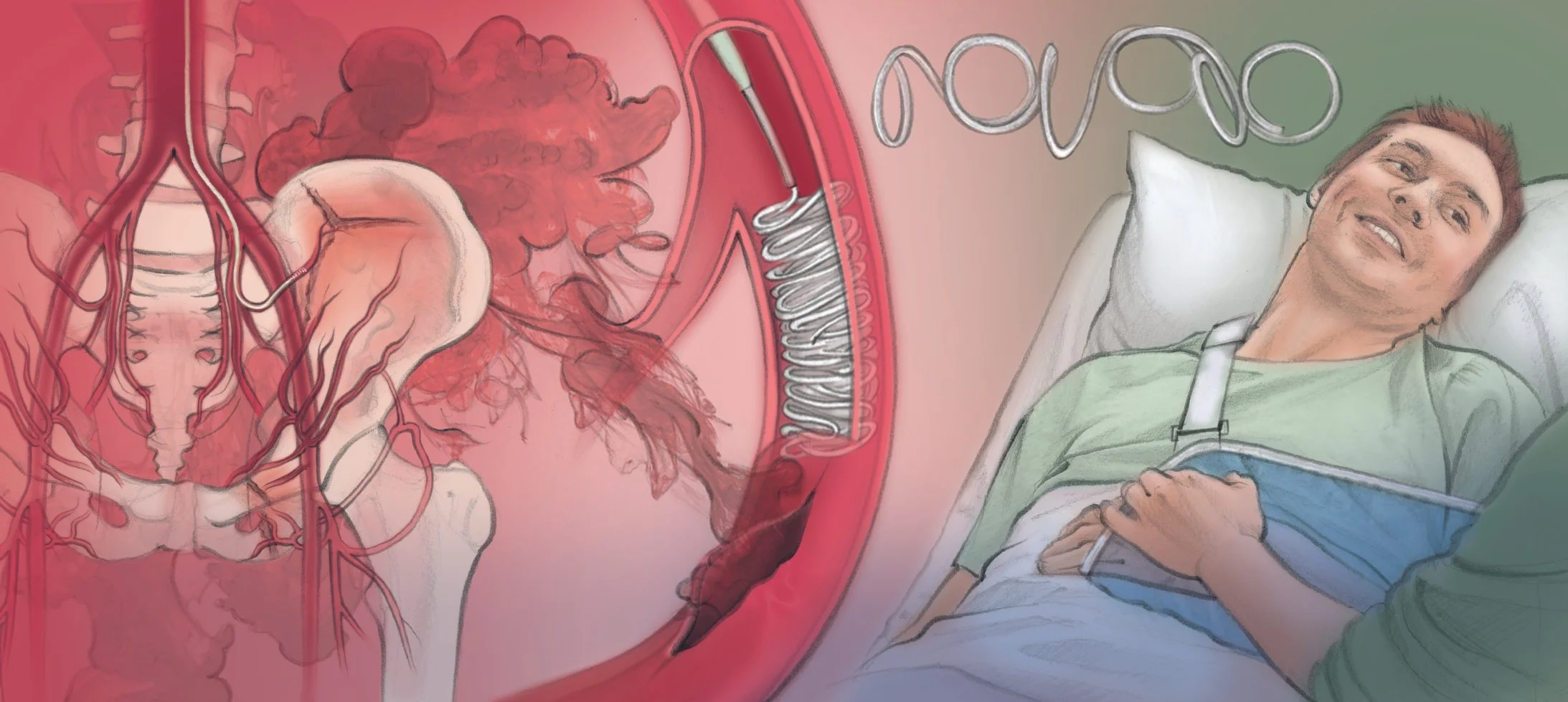
Trauma Embolization
Life-Saving Minimally Invasive Treatment for Internal Bleeding. Trauma Embolization is an advanced, minimally invasive interventional radiology procedure used to control internal bleeding caused by traumatic injuries. By precisely identifying and blocking damaged blood vessels, trauma embolization can rapidly stop hemorrhage, stabilize patients, and reduce the need for emergency surgery.
Our interventional radiology team provides 24/7 emergency trauma embolization services using state-of-the-art angiography systems and image-guided techniques to manage life-threatening bleeding with speed and precision.
What is Trauma Embolization?
Trauma embolization is a catheter-based procedure in which specialized materials are used to block bleeding blood vessels following an injury. Using real-time imaging guidance, an interventional radiologist navigates a tiny catheter through the blood vessels to the site of bleeding and seals the affected vessel.
This targeted approach allows bleeding to be controlled while preserving blood flow to surrounding healthy tissues.
When is Trauma Embolization Needed?
Trauma embolization is commonly performed in patients experiencing:
- Internal bleeding after accidents
- Blunt abdominal trauma
- Pelvic fractures with hemorrhage
- Liver injuries
- Splenic injuries
- Kidney trauma
- Vascular injuries
- Post-traumatic bleeding
- Active arterial bleeding detected on CT scans
- Bleeding following surgical or medical procedures
Prompt intervention can be critical in preventing severe blood loss and improving survival.
Conditions Treated with Trauma Embolization
Pelvic Trauma
Pelvic Fracture Hemorrhage
Pelvic fractures can cause severe arterial bleeding. Embolization helps rapidly control hemorrhage and stabilize the patient.
Liver Injury
Traumatic Liver Bleeding
Traumatic liver injuries may lead to internal bleeding that can often be managed without surgery through selective embolization.
Splenic Trauma
Spleen Injury Management
Embolization helps preserve spleen function while controlling bleeding from splenic injuries.
Renal Trauma
Kidney Injury Treatment
Kidney injuries resulting from accidents or trauma can be treated by embolizing the bleeding vessels.
Vascular Injury
Artery Damage
Direct injury to arteries may result in life-threatening hemorrhage that requires immediate intervention.
Post-Surgical Bleeding
After Surgery Complications
Embolization can effectively manage bleeding complications following surgery or invasive procedures.
How is Trauma Embolization Performed?
Step 1: Diagnostic Angiography
Access Blood Vessels
A catheter is inserted through a small puncture, usually in the groin or wrist, and advanced into the blood vessels.
Step 2: Identification of Bleeding Source
Locate Damaged Vessel
Contrast dye and real-time imaging are used to locate the damaged vessel responsible for bleeding.
Step 3: Embolization
Seal the Bleeding Vessel
Specialized embolic materials are delivered through the catheter to seal the bleeding vessel.
Common embolic agents include: Coils, particles, gel foam, vascular plugs, liquid embolic agents.
Step 4: Confirmation
Verify Bleeding Control
Final angiographic imaging confirms complete control of the bleeding.
Benefits of Trauma Embolization
Why Trauma Embolization is Important
In many trauma patients, immediate bleeding control is essential. Trauma embolization provides a highly effective method of managing hemorrhage while minimizing surgical risks.
The procedure is now considered a key component of modern trauma care and is frequently used alongside emergency medicine, trauma surgery, and critical care services.
Recovery After Trauma Embolization
Recovery depends on the severity of the injury and overall patient condition.
Patients may require:
- Intensive monitoring
- Follow-up imaging studies
- Blood transfusions if needed
- Rehabilitation services
- Ongoing trauma care
Many patients benefit from reduced recovery times compared to traditional surgical management.
Is Trauma Embolization Safe?
Trauma embolization is a well-established and highly effective procedure when performed by experienced interventional radiologists.
Potential risks are uncommon but may include:
- Minor bleeding at the catheter site
- Vessel injury
- Infection
- Temporary discomfort
- Rare non-target embolization
Advanced imaging guidance significantly improves safety and procedural success.
Why Choose Our Trauma Embolization Services?
We provide comprehensive emergency interventional radiology support for trauma patients using the latest imaging and embolization technologies.
Ready to Consult Dr. Tejendra Ramani?
Book your appointment today and get expert vascular care in Kutch.

Dr. Tejendra Ramani
Consultant Interventional Radiologist
Vascular · Neuro ·
Image-Guided Interventions
MD (Gold Medalist) Neuro & Vascular Interventional Specialist NIMHANS-trained Neuro Intervention, PhD Scholar
View Full Profile