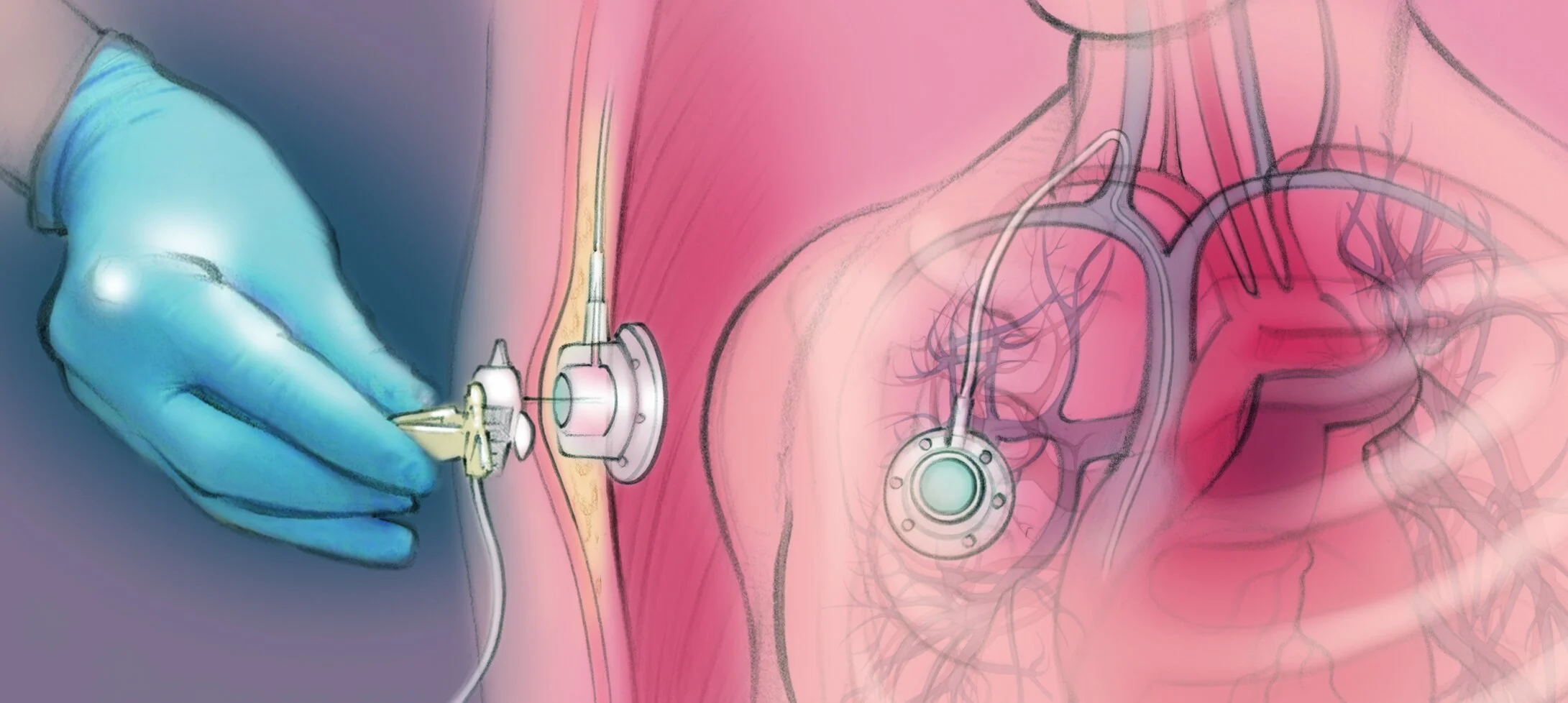
Port Placement
Safe and Reliable Long-Term Venous Access for Cancer and Chronic Medical Treatments. Port Placement is a minimally invasive procedure used to implant a small medical device, known as a port or port-a-cath, beneath the skin to provide long-term access to the bloodstream. Ports are commonly used for chemotherapy, immunotherapy, long-term intravenous medications, blood transfusions, nutritional support, and frequent blood sampling.
Our interventional radiology specialists perform image-guided port placement procedures with precision and safety, ensuring patient comfort and reliable vascular access for ongoing treatment.
What is a Port?
A port is a small, implantable device consisting of:
- A reservoir (port chamber) placed beneath the skin
- A thin catheter connected to the port
- A catheter tip positioned within a large central vein near the heart
The port allows healthcare providers to administer medications and draw blood without repeated needle sticks in the arms. Ports are completely concealed beneath the skin and can remain in place for months or even years if needed.
Why is Port Placement Needed?
Port placement is recommended for patients who require:
- Chemotherapy treatments
- Immunotherapy
- Long-term intravenous medications
- Repeated blood transfusions
- Frequent blood sampling
- Intravenous nutrition (TPN)
- Long-term antibiotic therapy
- Chronic medical treatments requiring reliable venous access
Ports help improve patient comfort and reduce damage to peripheral veins.
Benefits of Port Placement
How is Port Placement Performed?
Port placement is a minimally invasive outpatient procedure.
Procedure Steps
Minimally invasive · 30–60 minutes
- Local anesthesia and mild sedation may be administered.
- A small incision is made near the chest or upper arm.
- A catheter is inserted into a large vein using ultrasound and fluoroscopic guidance.
- The port chamber is placed beneath the skin.
- The catheter is connected to the port and positioned accurately.
- The incision is closed with sutures or surgical adhesive.
The procedure typically takes 30 to 60 minutes.
Conditions Commonly Requiring a Port
Port placement is frequently used for patients with:
- Breast cancer
- Lung cancer
- Colorectal cancer
- Lymphoma
- Leukemia
- Ovarian cancer
- Pancreatic cancer
- Gastrointestinal cancers
- Chronic infections requiring long-term IV therapy
- Nutritional disorders requiring intravenous feeding
Recovery After Port Placement
Most patients recover quickly and can return home the same day.
Following the procedure, patients may experience:
- Mild soreness around the insertion site
- Temporary bruising
- Minor swelling
These symptoms generally resolve within a few days. Patients receive detailed instructions on port care and maintenance to ensure optimal function and reduce infection risk.
Port Maintenance and Care
Proper maintenance helps keep the port functioning safely and effectively.
Recommendations include:
- Regular flushing as advised by your healthcare provider
- Keeping follow-up appointments
- Monitoring for signs of infection
- Reporting swelling, redness, or discomfort promptly
- Following proper access techniques during treatment
With appropriate care, ports can provide reliable access for extended periods.
Advantages of Image-Guided Port Placement
Our specialists use advanced imaging technology to ensure:
- Accurate catheter placement
- Enhanced procedural safety
- Reduced complication rates
- Improved patient comfort
- Faster recovery
- Optimal port performance
Image-guided techniques are considered the standard of care for port implantation.
Why Choose Our Port Placement Services?
We provide expert vascular access solutions using the latest interventional radiology techniques and patient-centered care.
Ready to Consult Dr. Tejendra Ramani?
Book your appointment today and get expert vascular care in Kutch.
Dr. Tejendra Ramani
Consultant Interventional Radiologist
Vascular · Neuro ·
Image-Guided Interventions
MD (Gold Medalist) Neuro & Vascular Interventional Specialist NIMHANS-trained Neuro Intervention, PhD Scholar
View Full Profile