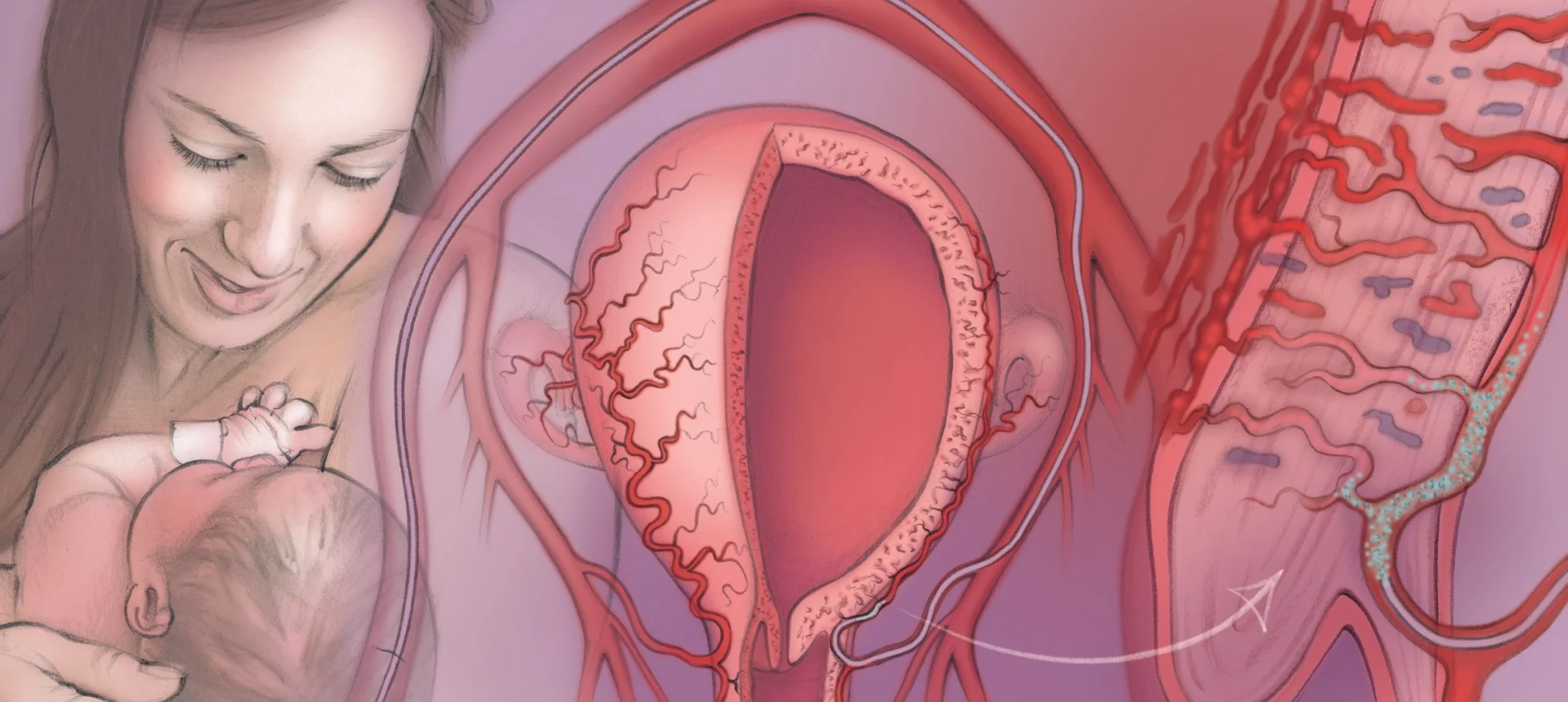
Postpartum Hemorrhage Embolization (Uterine Artery Embolization for PPH)
Life-Saving Minimally Invasive Treatment for Severe Postpartum Bleeding. Postpartum Hemorrhage (PPH) Embolization is an advanced, minimally invasive interventional radiology procedure used to control severe bleeding after childbirth. By precisely identifying and blocking the blood vessels responsible for hemorrhage, embolization can rapidly stop bleeding, preserve the uterus, and reduce the need for emergency surgery or hysterectomy.
Our interventional radiology specialists provide emergency postpartum hemorrhage embolization services using state-of-the-art angiography technology, helping mothers recover safely while preserving future fertility whenever possible.
What is Postpartum Hemorrhage (PPH)?
Postpartum Hemorrhage is excessive bleeding that occurs after vaginal delivery or cesarean section. It is one of the leading causes of maternal morbidity and mortality worldwide and requires immediate medical attention.
PPH can occur within the first 24 hours after delivery (primary PPH) or days to weeks later (secondary PPH).
Causes of Postpartum Hemorrhage
Common causes include:
- Uterine Atony (failure of the uterus to contract)
- Retained Placental Tissue
- Placenta Accreta Spectrum Disorders
- Placenta Previa
- Uterine Rupture
- Birth Canal Trauma
- Cervical or Vaginal Tears
- Coagulation Disorders
- Post-Cesarean Bleeding
- Abnormal Uterine Blood Vessels
Rapid diagnosis and treatment are critical to prevent serious complications.
What is Postpartum Hemorrhage Embolization?
Postpartum Hemorrhage Embolization, also known as Uterine Artery Embolization (UAE) for PPH, is a minimally invasive procedure that stops bleeding by blocking the blood vessels supplying the uterus.
Using real-time imaging guidance, an interventional radiologist inserts a catheter into the pelvic arteries and delivers embolic agents to control the hemorrhage without removing the uterus.
When is Embolization Recommended?
PPH embolization may be considered when:
- Bleeding persists despite medications
- Uterine massage fails to control hemorrhage
- Surgical intervention is high risk
- Fertility preservation is desired
- Blood loss remains significant despite conservative treatment
- Recurrent postpartum bleeding occurs
The procedure is often performed as an emergency, life-saving intervention.
How is Postpartum Hemorrhage Embolization Performed?
Step 1: Vascular Access
Insert Catheter
A small catheter is inserted through an artery, typically in the groin.
Step 2: Angiographic Evaluation
Identify Bleeding Source
Contrast dye is injected to identify the exact source of bleeding.
Step 3: Selective Embolization
Block the Bleeding Vessels
The catheter is guided into the uterine arteries, and embolic materials are delivered to stop the bleeding.
Common embolic materials include: Gel foam particles, embolization microspheres, temporary embolic agents, specialized vascular occlusion materials.
Step 4: Confirmation
Verify Hemorrhage Control
A final angiogram confirms successful control of the hemorrhage.
Benefits of Postpartum Hemorrhage Embolization
Conditions Treated with Uterine Artery Embolization for PPH
Uterine Atony
Most Common Cause of PPH
The most common cause of postpartum hemorrhage.
Placenta Accreta Spectrum
Abnormal Placental Attachment
Abnormal placental attachment causing severe bleeding.
Post-Cesarean Hemorrhage
After C-Section Bleeding
Bleeding complications following cesarean delivery.
Delayed Postpartum Hemorrhage
Late-Onset Bleeding
Bleeding occurring days or weeks after childbirth.
Pelvic Vascular Injuries
Blood Vessel Damage
Damage to blood vessels during delivery or surgery.
Recovery After Embolization
Most patients experience rapid stabilization following the procedure.
Recovery typically includes:
- Close monitoring in the hospital
- Blood count and vital sign assessment
- Management of postpartum recovery
- Follow-up imaging when required
- Ongoing obstetric care
Many women can resume normal postpartum recovery once bleeding is controlled.
Fertility and Future Pregnancies
One of the major advantages of postpartum hemorrhage embolization is uterine preservation. Many women can retain reproductive potential and may be able to conceive in the future, depending on their overall health and underlying condition.
Future pregnancy planning should always be discussed with both obstetric and interventional radiology specialists.
Is Postpartum Hemorrhage Embolization Safe?
PPH embolization is a well-established and highly effective procedure with excellent success rates in controlling severe postpartum bleeding.
Potential risks are uncommon and may include:
- Minor bleeding at the catheter site
- Temporary pelvic discomfort
- Infection
- Allergic reaction to contrast dye
- Rare non-target embolization
Advanced imaging guidance helps maximize safety and procedural precision.
Why Choose Our Postpartum Hemorrhage Embolization Services?
We provide emergency interventional radiology support for obstetric bleeding using advanced technology and multidisciplinary expertise.
When Should You Seek Emergency Care?
Immediate medical attention is necessary if you experience:
- Vomiting blood
- Black or bloody stools
- Severe dizziness
- Sudden weakness
- Fainting
- Signs of shock
Early treatment can be life-saving and significantly improve outcomes.
Ready to Consult Dr. Tejendra Ramani?
Book your appointment today and get expert vascular care in Kutch.

Dr. Tejendra Ramani
Consultant Interventional Radiologist
Vascular · Neuro ·
Image-Guided Interventions
MD (Gold Medalist) Neuro & Vascular Interventional Specialist NIMHANS-trained Neuro Intervention, PhD Scholar
View Full Profile