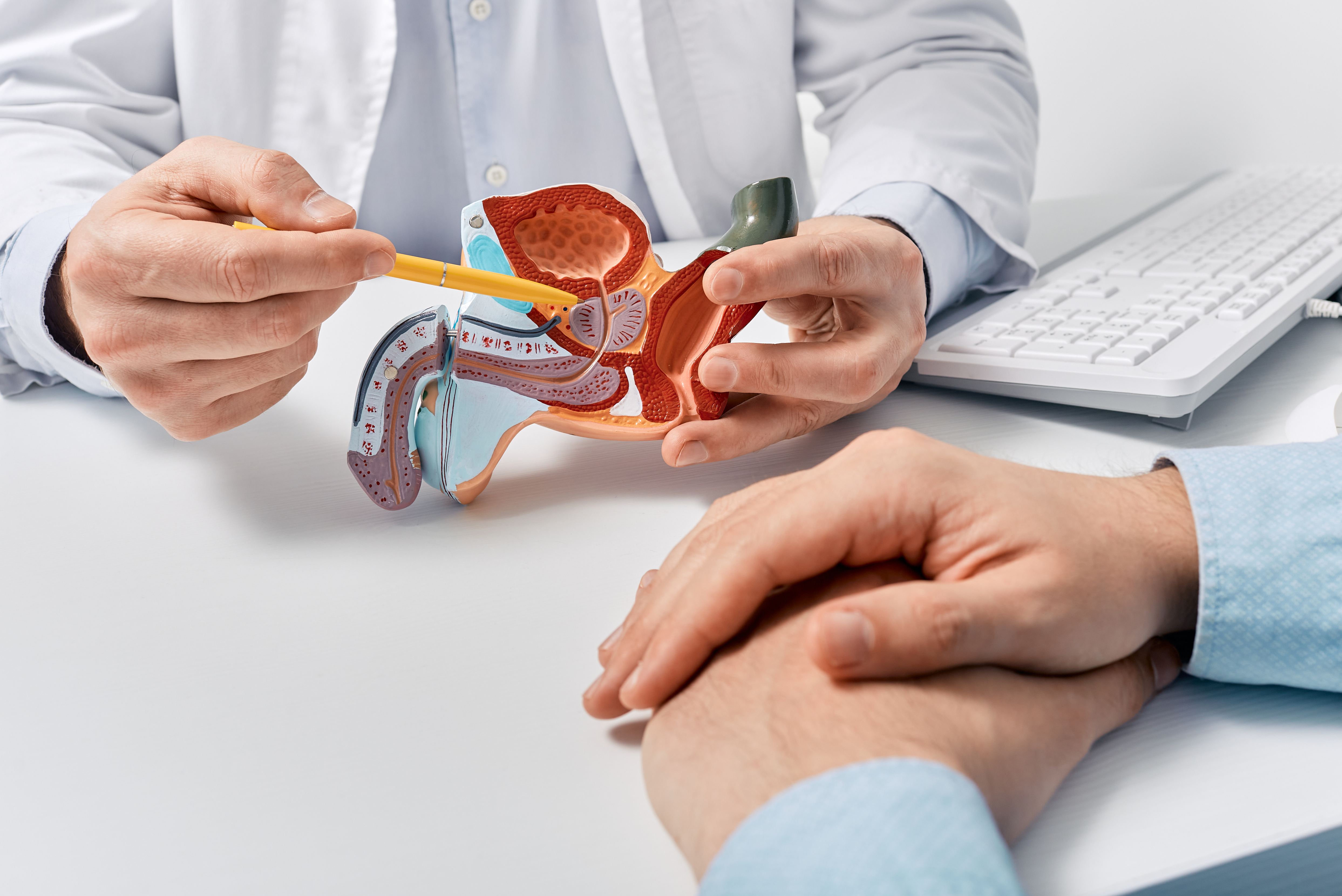
Prostate Artery Embolization (PAE)
A Minimally Invasive Treatment for Enlarged Prostate (BPH). Prostate Artery Embolization (PAE) is an advanced, minimally invasive procedure used to treat Benign Prostatic Hyperplasia (BPH), commonly known as an enlarged prostate. PAE reduces the size of the prostate by blocking its blood supply, helping relieve urinary symptoms without the need for major surgery.
Our interventional radiology specialists offer state-of-the-art Prostate Artery Embolization using advanced imaging guidance, providing effective symptom relief with minimal downtime and a faster recovery compared to traditional surgical treatments.
What is Benign Prostatic Hyperplasia (BPH)?
Benign Prostatic Hyperplasia is a non-cancerous enlargement of the prostate gland that commonly affects men as they age. As the prostate enlarges, it can compress the urethra and interfere with normal urine flow.
BPH is one of the most common causes of lower urinary tract symptoms in men over the age of 50.
Symptoms of an Enlarged Prostate
Common symptoms of BPH include:
- Frequent urination, especially at night
- Difficulty starting urination
- Weak urine stream
- Interrupted urine flow
- Urgency to urinate
- Incomplete bladder emptying
- Straining during urination
- Dribbling after urination
- Recurrent urinary tract infections
- Urinary retention in severe cases
These symptoms can significantly affect quality of life and daily activities.
What is Prostate Artery Embolization (PAE)?
Prostate Artery Embolization is a minimally invasive image-guided procedure that reduces blood flow to the enlarged prostate. Tiny embolic particles are injected into the arteries supplying the prostate, causing the gland to shrink gradually over time.
As the prostate decreases in size, urinary symptoms improve and bladder function is restored.
Who is a Candidate for PAE?
PAE may be suitable for men who:
- Have moderate to severe BPH symptoms
- Wish to avoid surgery
- Are not ideal candidates for surgical treatment
- Have large prostate glands
- Experience medication side effects
- Have persistent urinary symptoms despite medical therapy
- Want a minimally invasive treatment option
A thorough evaluation is performed to determine if PAE is the most appropriate treatment.
How is PAE Performed?
The procedure is typically performed on an outpatient basis and usually takes one to two hours.
Procedure Steps
Minimally invasive · 1–2 hours
- Local anesthesia is administered.
- A small catheter is inserted through an artery in the wrist or groin.
- Using advanced imaging guidance, the catheter is navigated to the arteries supplying the prostate.
- Tiny embolic particles are injected into the prostate arteries.
- Blood flow to the enlarged prostate tissue is reduced.
- The catheter is removed, and the procedure is completed.
Benefits of Prostate Artery Embolization
Recovery After PAE
Most patients return home on the same day or after a short observation period.
Following the procedure, patients may experience:
- Mild pelvic discomfort
- Increased urinary frequency for a few days
- Temporary burning during urination
- Mild fatigue
These symptoms are usually short-lived and improve as healing occurs. Most men can resume normal daily activities within a few days.
Results of Prostate Artery Embolization
Over the weeks and months following treatment, many patients experience:
- Improved urine flow
- Reduced urinary frequency
- Better bladder emptying
- Fewer nighttime bathroom visits
- Improved quality of life
- Reduced dependence on BPH medications
Clinical studies have shown significant and durable symptom improvement in appropriately selected patients.
PAE vs. Traditional Prostate Surgery
Compared with surgical procedures such as TURP (Transurethral Resection of the Prostate), PAE offers several advantages:
Prostate Artery Embolization
Minimally Invasive
- Minimally invasive
- No tissue removal
- Faster recovery
- Local anesthesia
- Minimal blood loss
- Outpatient treatment
Traditional Surgery
Surgical Procedure
- Surgical procedure
- Tissue removal required
- Longer recovery period
- Often requires spinal or general anesthesia
- Higher bleeding risk
- May require hospitalization
The best treatment option depends on prostate size, symptoms, and individual health factors.
Why Choose Our PAE Program?
We provide advanced prostate embolization services using the latest interventional radiology techniques and imaging technologies.
Ready to Consult Dr. Tejendra Ramani?
Book your appointment today and get expert vascular care in Kutch.

Dr. Tejendra Ramani
Consultant Interventional Radiologist
Vascular · Neuro ·
Image-Guided Interventions
MD (Gold Medalist) Neuro & Vascular Interventional Specialist NIMHANS-trained Neuro Intervention, PhD Scholar
View Full Profile