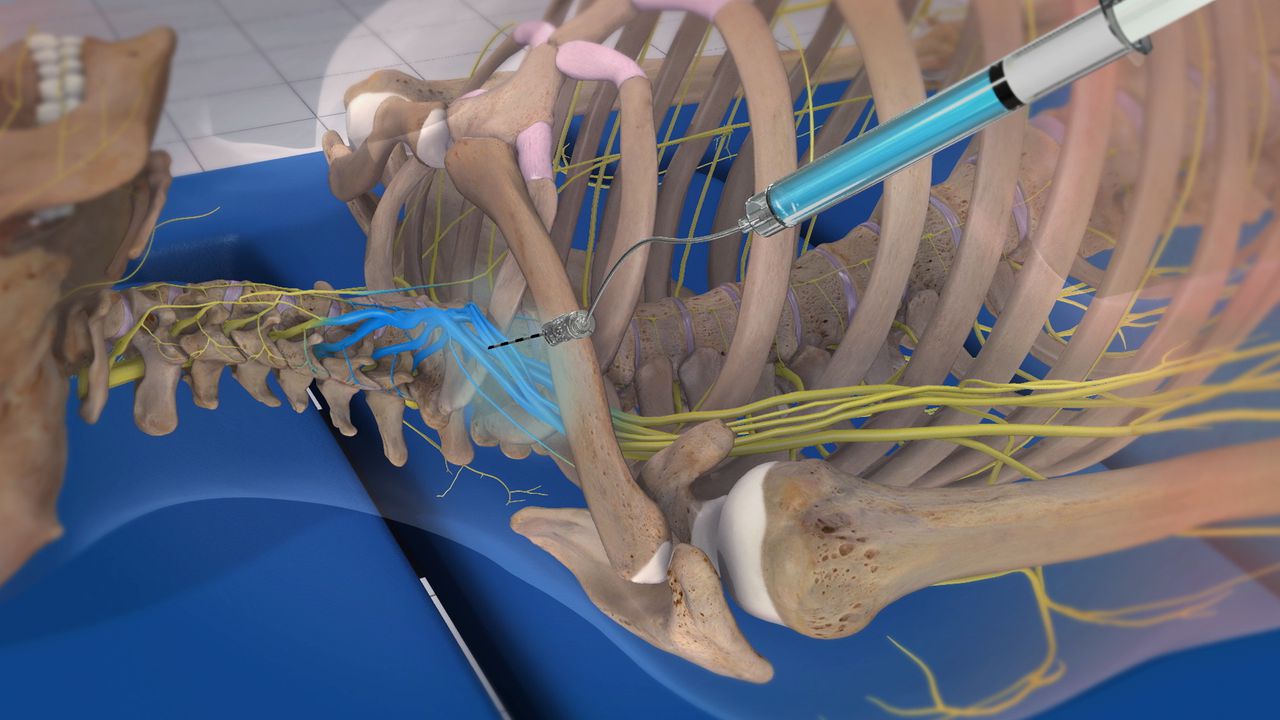
Nerve Blocks
Effective Minimally Invasive Pain Relief Through Targeted Nerve Block Procedures. Nerve Blocks are advanced, image-guided pain management procedures used to diagnose and treat acute and chronic pain conditions. By delivering medication directly around specific nerves, nerve blocks can interrupt pain signals, reduce inflammation, and provide significant pain relief. These minimally invasive treatments are widely used for spine pain, joint pain, nerve-related disorders, cancer pain, and post-surgical pain management.
Our interventional pain specialists perform precision-guided nerve block procedures to help patients achieve lasting pain relief, improve mobility, and enhance their quality of life without major surgery.
What is a Nerve Block?
A nerve block is a procedure in which a local anesthetic, anti-inflammatory medication, or a combination of medications is injected near a specific nerve or group of nerves responsible for transmitting pain signals.
Nerve blocks can be used for:
- Pain diagnosis
- Temporary pain relief
- Long-term pain management
- Surgical pain control
- Cancer-related pain management
- Rehabilitation support
These procedures are performed using imaging guidance such as ultrasound, fluoroscopy, or CT scans to ensure accuracy and safety.
Conditions Treated with Nerve Blocks
Nerve blocks can help manage a wide range of painful conditions, including:
Chronic Back and Neck Pain
Spine-Related Pain
Targeted treatment for pain arising from the spine, discs, or surrounding structures.
Sciatica and Nerve Compression
Radiating Nerve Pain
Relief from pain radiating down the legs or arms due to irritated or compressed nerves.
Arthritis-Related Pain
Joint Degeneration Pain
Management of pain caused by degenerative joint conditions.
Post-Surgical Pain
After Surgery Pain Control
Effective control of pain following orthopedic, abdominal, or other surgical procedures.
Cancer Pain
Oncology Pain Management
Targeted pain relief for patients with cancer-related discomfort.
Complex Regional Pain Syndrome (CRPS)
Chronic Nerve Pain Syndrome
Specialized nerve blocks can help reduce chronic nerve pain and improve function.
Headache and Facial Pain
Migraine and Neuralgia
Treatment for migraines, occipital neuralgia, trigeminal neuralgia, and other headache disorders.
Peripheral Nerve Pain
Extremity Nerve Pain
Management of pain involving nerves in the arms, legs, hands, or feet.
Types of Nerve Blocks
Epidural Nerve Block
Spinal Nerve Pain Relief
Used to relieve pain caused by:
- Herniated discs
- Sciatica
- Spinal stenosis
- Nerve root irritation
Facet Joint Nerve Block
Spinal Joint Pain
Targets nerves supplying the facet joints of the spine to relieve chronic neck and back pain.
Selective Nerve Root Block
Diagnose and Treat Spinal Nerves
A diagnostic and therapeutic procedure used to identify and treat irritated spinal nerves.
Occipital Nerve Block
Headache and Migraine Treatment
Commonly used for:
- Chronic headaches
- Migraines
- Occipital neuralgia
Sympathetic Nerve Block
Autonomic Nerve Pain Syndromes
Used for conditions involving abnormal nerve activity and chronic pain syndromes.
Peripheral Nerve Block
Extremity Nerve Pain
Provides targeted relief for pain involving specific nerves in the upper or lower extremities.
Genicular Nerve Block
Knee Osteoarthritis Pain
Used to diagnose and manage chronic knee pain and osteoarthritis-related discomfort.
Benefits of Nerve Block Procedures
How is a Nerve Block Performed?
Most nerve block procedures take less than 30 minutes and are performed on an outpatient basis.
Procedure Steps
Minimally invasive · Less than 30 minutes
- The treatment area is cleaned and prepared.
- Local anesthesia may be administered.
- Imaging guidance is used to identify the target nerve.
- Medication is injected around the nerve.
- The patient is monitored briefly before discharge.
Recovery After a Nerve Block
Recovery is generally quick, and most patients can return home shortly after the procedure.
Patients may experience:
- Temporary numbness
- Mild soreness at the injection site
- Gradual improvement in pain symptoms
Depending on the condition being treated, pain relief may last from weeks to several months.
Are Nerve Blocks Safe?
Nerve blocks are considered safe when performed by experienced specialists using advanced imaging guidance. Careful planning and precise needle placement help minimize risks and maximize treatment effectiveness.
When Should You Consider a Nerve Block?
You may benefit from a nerve block if you:
- Have chronic pain that limits daily activities
- Experience nerve-related pain or numbness
- Have not responded to medications or physical therapy
- Need diagnostic evaluation of pain sources
- Want a minimally invasive alternative to surgery
A consultation with our specialists can help determine whether a nerve block is the right treatment option for your condition.
Why Choose Our Nerve Block Services?
We offer comprehensive pain management solutions using the latest image-guided interventional techniques.
Ready to Consult Dr. Tejendra Ramani?
Book your appointment today and get expert vascular care in Kutch.

Dr. Tejendra Ramani
Consultant Interventional Radiologist
Vascular · Neuro ·
Image-Guided Interventions
MD (Gold Medalist) Neuro & Vascular Interventional Specialist NIMHANS-trained Neuro Intervention, PhD Scholar
View Full Profile