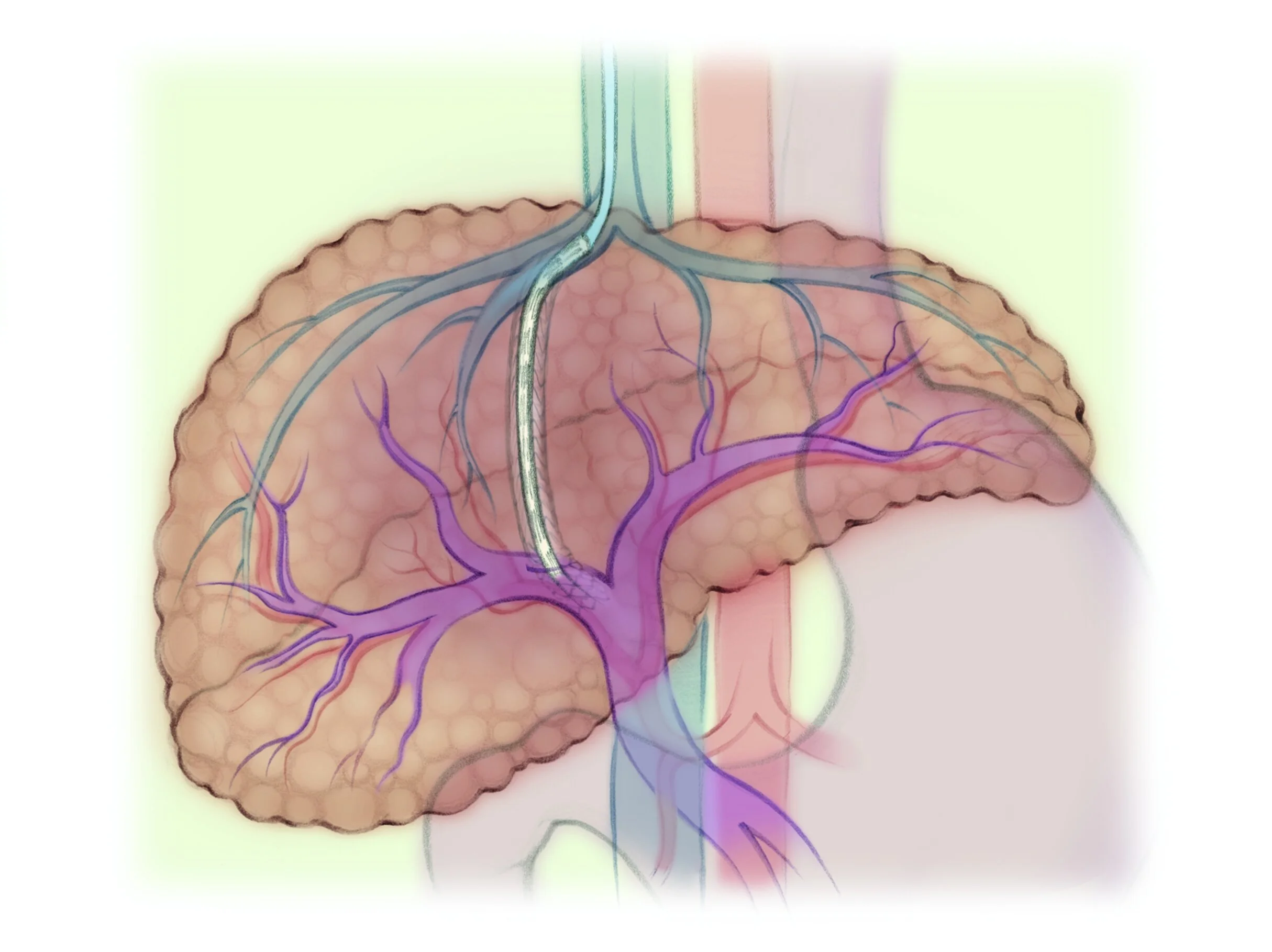
TIPS (Transjugular Intrahepatic Portosystemic Shunt)
Advanced Minimally Invasive Treatment for Portal Hypertension. Transjugular Intrahepatic Portosystemic Shunt (TIPS) is a specialized image-guided procedure used to treat complications of portal hypertension, a condition characterized by increased pressure in the portal vein system. TIPS creates a new pathway for blood flow through the liver, helping reduce portal pressure and preventing life-threatening complications such as variceal bleeding and refractory ascites.
Our interventional radiology specialists perform TIPS procedures using advanced imaging technology to provide effective symptom relief and improve quality of life for patients with chronic liver disease.
What is Portal Hypertension?
The portal vein carries blood from the digestive organs to the liver. When blood flow through the liver becomes obstructed, pressure builds up within the portal venous system, resulting in portal hypertension.
Portal hypertension is most commonly caused by:
- Liver Cirrhosis
- Chronic Liver Disease
- Hepatitis-Related Liver Damage
- Portal Vein Thrombosis
- Non-Alcoholic Fatty Liver Disease (NAFLD)
- Budd-Chiari Syndrome
- Congenital Liver Disorders
Without treatment, portal hypertension can lead to serious complications.
Complications of Portal Hypertension
Patients may develop:
Esophageal and Gastric Varices
Enlarged Veins Risking Bleeding
Enlarged veins in the esophagus or stomach that can rupture and cause severe bleeding.
Refractory Ascites
Persistent Abdominal Fluid
Persistent fluid accumulation in the abdomen that does not respond to medical treatment.
Hepatic Hydrothorax
Fluid Around Lungs
Fluid buildup around the lungs due to portal hypertension.
Recurrent Variceal Bleeding
Life-Threatening Gastrointestinal Bleeding
Repeated episodes of gastrointestinal bleeding that may become life-threatening.
Portal Hypertensive Gastropathy
Stomach Lining Changes
Changes in the stomach lining caused by elevated portal pressure.
What is a TIPS Procedure?
TIPS is a minimally invasive procedure that creates a channel within the liver connecting the portal vein to one of the hepatic veins. A stent is then placed within this channel to maintain blood flow.
This new pathway allows blood to bypass the damaged liver tissue, reducing pressure within the portal venous system.
How is TIPS Performed?
The procedure is performed in a dedicated interventional radiology suite.
Procedure Steps
Minimally invasive · Image-guided
- Local anesthesia and conscious sedation or general anesthesia are administered.
- A catheter is inserted through the jugular vein in the neck.
- Using fluoroscopic and ultrasound guidance, the catheter is advanced into the liver.
- A channel is created between the portal vein and hepatic vein.
- A specialized stent is placed to keep the channel open.
- Blood flow is redirected, reducing portal vein pressure.
Who is a Candidate for TIPS?
TIPS may be recommended for patients with:
- Recurrent variceal bleeding
- Refractory ascites
- Hepatic hydrothorax
- Portal hypertension complications
- Certain cases of portal vein thrombosis
- Budd-Chiari Syndrome
- Liver disease requiring portal decompression
A thorough evaluation is conducted to determine whether TIPS is appropriate for each patient.
Benefits of TIPS
Recovery After TIPS
Following the procedure, patients are monitored closely to assess liver function and stent performance.
Recovery may include:
- Short hospital stay
- Imaging follow-up examinations
- Medication adjustments
- Regular monitoring of liver health
- Long-term stent surveillance
Most patients experience significant improvement in symptoms related to portal hypertension.
TIPS and Liver Transplantation
For some patients with advanced liver disease, TIPS can serve as an important bridge to liver transplantation by controlling complications while awaiting a donor organ.
The procedure may improve patient stability and reduce hospitalization related to portal hypertension.
Risks and Considerations
While TIPS is generally safe and effective, patients are carefully evaluated for potential risks, including:
- Hepatic encephalopathy
- Stent narrowing or blockage
- Bleeding complications
- Infection
- Changes in liver function
Regular follow-up helps ensure optimal outcomes and early management of any complications.
Conditions Commonly Managed with TIPS
Our team manages the following conditions with TIPS:
- Liver Cirrhosis
- Portal Hypertension
- Recurrent Variceal Bleeding
- Refractory Ascites
- Hepatic Hydrothorax
- Budd-Chiari Syndrome
- Portal Vein Disorders
Our team works closely with hepatologists, gastroenterologists, transplant specialists, and critical care physicians to provide coordinated care.
Why Choose Our TIPS Program?
We provide comprehensive portal hypertension management using advanced interventional radiology techniques and multidisciplinary liver care.
Ready to Consult Dr. Tejendra Ramani?
Book your appointment today and get expert vascular care in Kutch.

Dr. Tejendra Ramani
Consultant Interventional Radiologist
Vascular · Neuro ·
Image-Guided Interventions
MD (Gold Medalist) Neuro & Vascular Interventional Specialist NIMHANS-trained Neuro Intervention, PhD Scholar
View Full Profile