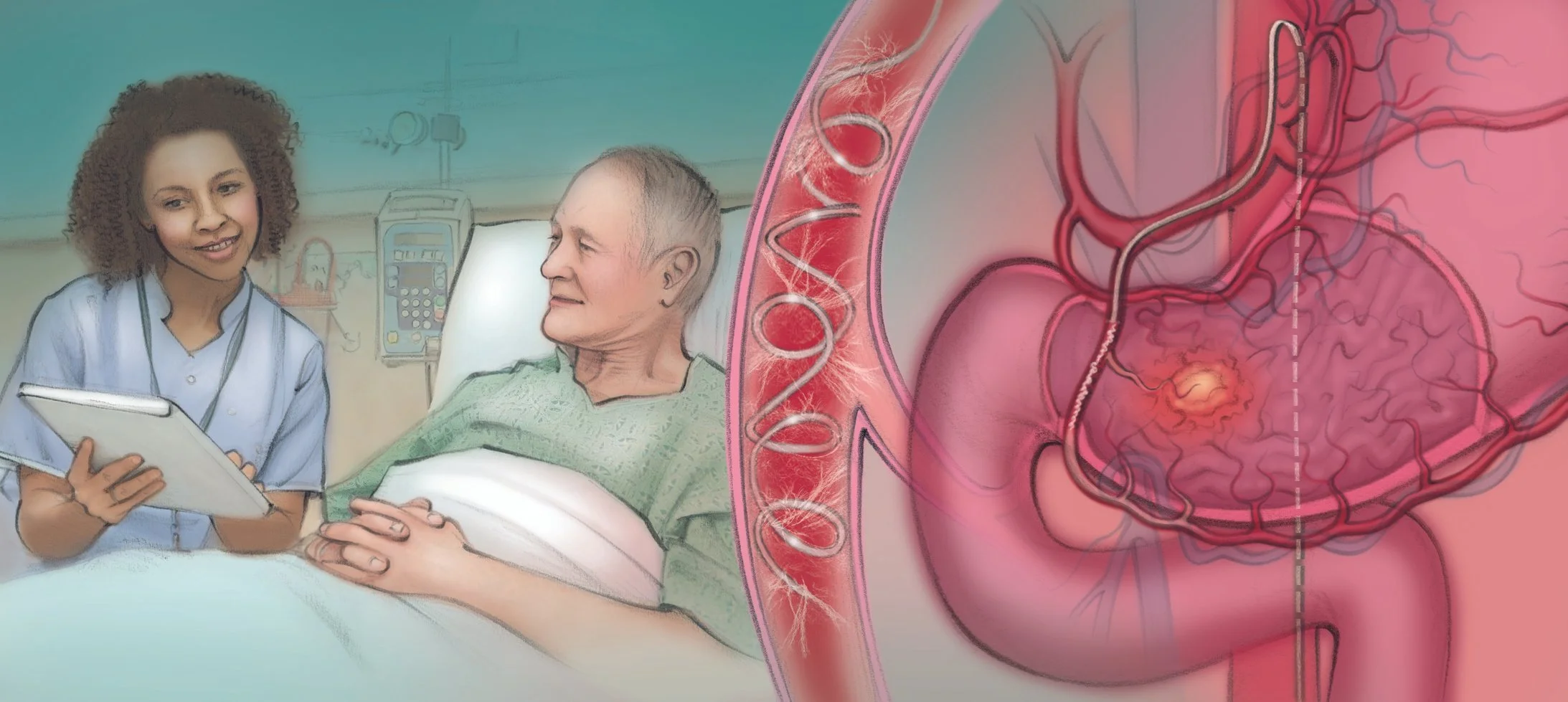
GI Bleed Embolization
Advanced Minimally Invasive Treatment for Gastrointestinal Bleeding. GI Bleed Embolization is a highly effective, image-guided interventional radiology procedure used to control active bleeding within the gastrointestinal (GI) tract. By precisely targeting and sealing the bleeding blood vessel, embolization can rapidly stop hemorrhage, stabilize patients, and often eliminate the need for emergency surgery.
Our interventional radiology specialists provide advanced GI bleeding management using state-of-the-art angiography technology, offering life-saving treatment for both acute and chronic gastrointestinal hemorrhage.
What is Gastrointestinal (GI) Bleeding?
Gastrointestinal bleeding refers to bleeding that occurs anywhere along the digestive tract, including the esophagus, stomach, small intestine, colon, rectum, or anus. GI bleeding can range from mild blood loss to severe, life-threatening hemorrhage requiring immediate medical attention.
When endoscopic treatment is unsuccessful or not possible, GI Bleed Embolization offers a safe and effective alternative.
What is GI Bleed Embolization?
GI Bleed Embolization is a minimally invasive procedure in which an interventional radiologist uses a catheter to access the blood vessels supplying the gastrointestinal tract. Once the bleeding vessel is identified, specialized embolic materials are delivered to block the vessel and stop the bleeding.
The procedure is performed under real-time imaging guidance, ensuring precise treatment while preserving blood flow to healthy tissues.
Causes of Gastrointestinal Bleeding
GI bleeding may occur due to:
- Peptic ulcers
- Gastric ulcers
- Duodenal ulcers
- Diverticular disease
- Angiodysplasia
- Gastrointestinal tumors
- Inflammatory bowel disease
- Post-surgical bleeding
- Trauma-related injury
- Vascular malformations
- Radiation-induced bowel injury
- Bleeding after endoscopic procedures
Prompt diagnosis and treatment are essential to prevent serious complications.
Symptoms of GI Bleeding
Patients may experience:
- Vomiting blood (Hematemesis)
- Black, tarry stools (Melena)
- Bright red blood in stools
- Rectal bleeding
- Dizziness or fainting
- Weakness and fatigue
- Low blood pressure
- Rapid heart rate
- Abdominal pain
- Signs of anemia
Severe bleeding may lead to shock and requires immediate medical intervention.
How is GI Bleed Embolization Performed?
Step 1: Angiographic Evaluation
Access the Blood Vessels
A catheter is inserted through a small puncture in the groin or wrist and guided into the arteries supplying the gastrointestinal tract.
Step 2: Localization of Bleeding
Identify the Bleeding Site
Contrast dye is injected while real-time angiographic imaging identifies the exact source of bleeding.
Step 3: Embolization
Stop the Hemorrhage
Once the bleeding vessel is located, embolic materials are delivered through the catheter to stop the hemorrhage.
Common embolic agents include: Microcoils, embolization particles, gel foam, vascular plugs, liquid embolic materials.
Step 4: Confirmation
Verify Bleeding Control
A final angiogram confirms successful control of the bleeding.
Conditions Treated with GI Bleed Embolization
Upper GI Bleeding
Esophagus, Stomach, Duodenum
Bleeding originating from the esophagus, stomach, or duodenum.
Lower GI Bleeding
Small Intestine, Colon, Rectum
Bleeding originating from the small intestine, colon, or rectum.
Tumor-Related GI Bleeding
Cancer-Associated Hemorrhage
Bleeding caused by gastrointestinal cancers or metastatic lesions.
Post-Operative GI Hemorrhage
After Surgery Bleeding
Bleeding occurring after abdominal or gastrointestinal surgery.
Recurrent GI Bleeding
Persistent or Repeat Bleeding
Patients with repeated episodes of bleeding despite medical or endoscopic treatment.
Benefits of GI Bleed Embolization
Recovery After GI Bleed Embolization
Recovery depends on the severity of bleeding and overall patient condition.
Most patients can expect:
- Close monitoring after the procedure
- Stabilization of blood counts
- Improvement in symptoms
- Follow-up imaging when necessary
- Gradual return to normal activities
Many patients experience immediate control of bleeding and significant clinical improvement.
Is GI Bleed Embolization Safe?
GI Bleed Embolization is a well-established procedure with excellent safety and success rates when performed by experienced interventional radiologists.
Potential risks are uncommon and may include:
- Minor bleeding at the catheter site
- Temporary abdominal discomfort
- Vessel injury
- Infection
- Rare bowel ischemia
Advanced imaging and modern embolization techniques help minimize these risks.
Why Choose Our GI Bleeding Intervention Services?
We provide comprehensive gastrointestinal bleeding management through advanced interventional radiology techniques and multidisciplinary care.
When Should You Seek Emergency Care?
Immediate medical attention is necessary if you experience:
- Vomiting blood
- Black or bloody stools
- Severe dizziness
- Sudden weakness
- Fainting
- Signs of shock
Early treatment can be life-saving and significantly improve outcomes.
Ready to Consult Dr. Tejendra Ramani?
Book your appointment today and get expert vascular care in Kutch.

Dr. Tejendra Ramani
Consultant Interventional Radiologist
Vascular · Neuro ·
Image-Guided Interventions
MD (Gold Medalist) Neuro & Vascular Interventional Specialist NIMHANS-trained Neuro Intervention, PhD Scholar
View Full Profile