Percutaneous Transhepatic Biliary Drainage (PTBD)
Advanced Minimally Invasive Treatment for Bile Duct Obstruction. Percutaneous Transhepatic Biliary Drainage (PTBD) is a specialized image-guided procedure used to relieve blockage in the bile ducts and restore the normal flow of bile from the liver to the intestine. This minimally invasive treatment is often performed when bile duct obstruction causes jaundice, infection, or liver dysfunction and when endoscopic treatment is not possible or has been unsuccessful.
Our interventional radiology specialists perform PTBD using advanced imaging technology to provide effective symptom relief, improve liver function, and enhance patient outcomes.
What is Biliary Obstruction?
The bile ducts are small tubes that carry bile from the liver and gallbladder to the small intestine, where it helps digest fats. When these ducts become blocked, bile accumulates in the liver, leading to serious complications.
Biliary obstruction can result from benign or malignant conditions and requires timely treatment to prevent infection and liver damage.
Causes of Bile Duct Obstruction
Common causes include:
- Cholangiocarcinoma (Bile Duct Cancer)
- Pancreatic Cancer
- Gallbladder Cancer
- Liver Tumors
- Metastatic Cancer
- Bile Duct Strictures
- Gallstones
- Post-surgical Biliary Narrowing
- Chronic Inflammatory Conditions
- Compression from Enlarged Lymph Nodes
Early diagnosis and treatment are essential to prevent complications.
Symptoms of Biliary Obstruction
Patients may experience:
- Jaundice (yellowing of the skin and eyes)
- Dark urine
- Pale or clay-colored stools
- Itching (pruritus)
- Abdominal pain
- Nausea and vomiting
- Fever and chills
- Loss of appetite
- Unexplained weight loss
- Fatigue
These symptoms may worsen if the blockage is not treated promptly.
What is PTBD?
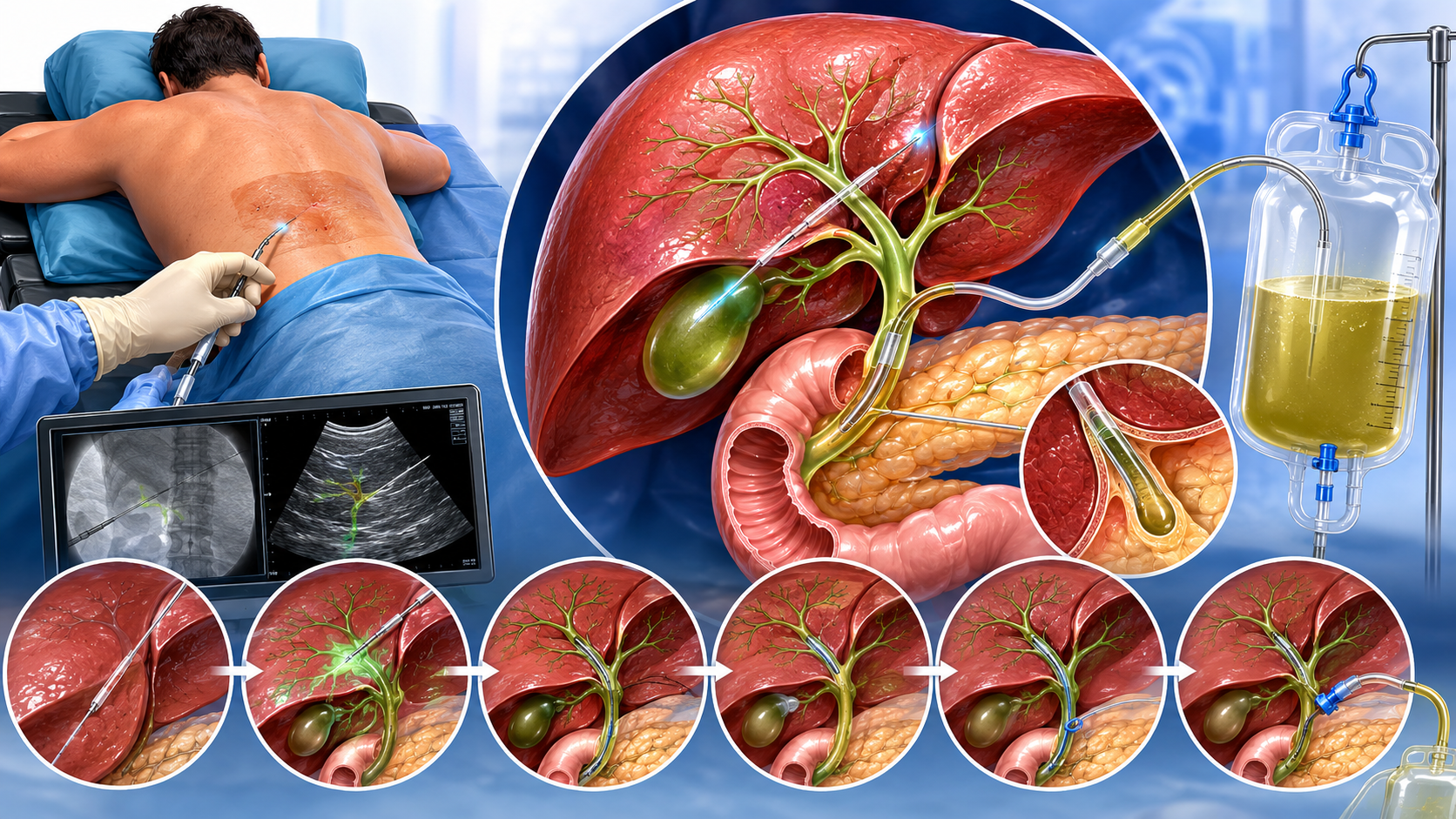
Percutaneous Transhepatic Biliary Drainage is a minimally invasive procedure that creates a pathway for bile to drain when the normal bile ducts are blocked.
Using ultrasound and fluoroscopic guidance, a small catheter is inserted through the skin and liver into the bile ducts to bypass the obstruction and restore bile drainage.
The procedure can provide immediate relief from jaundice and help improve liver function.
How is PTBD Performed?
The procedure is performed in a specialized interventional radiology suite.
Procedure Steps
Minimally invasive · Image-guided
- Local anesthesia and sedation are administered.
- Ultrasound and fluoroscopic imaging are used to identify the bile ducts.
- A fine needle is inserted through the skin into the liver.
- Contrast dye is injected to visualize the biliary system.
- A guidewire and drainage catheter are placed into the blocked bile duct.
- Bile is drained either externally or internally into the intestine.
- The catheter is secured in place for continued drainage if required.
Types of Biliary Drainage
External Biliary Drainage
Bile Drains Outside Body
Bile drains into a collection bag outside the body through a catheter.
Internal-External Biliary Drainage
Dual Drainage Pathway
Allows bile to flow both internally into the intestine and externally when necessary.
Biliary Stent Placement
Long-Term Drainage Solution
In many cases, a metal or plastic stent can be placed to keep the bile duct open and maintain long-term drainage.
Benefits of PTBD
Recovery After PTBD
Most patients experience significant symptom improvement within days of the procedure.
After treatment, patients may:
- Stay in the hospital for observation
- Receive catheter care instructions
- Undergo follow-up imaging studies
- Return for stent placement or catheter exchange if required
Regular monitoring helps ensure optimal drainage and long-term success.
PTBD for Cancer Patients
PTBD plays a vital role in managing patients with:
- Pancreatic cancer
- Bile duct cancer
- Gallbladder cancer
- Liver tumors
- Metastatic cancers causing biliary obstruction
By relieving jaundice and improving liver function, PTBD often allows patients to proceed with chemotherapy, surgery, or other cancer treatments.
Why Choose Our PTBD Services?
We provide advanced biliary intervention procedures using state-of-the-art imaging and minimally invasive techniques.
Ready to Consult Dr. Tejendra Ramani?
Book your appointment today and get expert vascular care in Kutch.

Dr. Tejendra Ramani
Consultant Interventional Radiologist
Vascular · Neuro ·
Image-Guided Interventions
MD (Gold Medalist) Neuro & Vascular Interventional Specialist NIMHANS-trained Neuro Intervention, PhD Scholar
View Full Profile